Atlanta homeowners ask this every summer, usually after finding a musty smell in a crawl space or a dark ring on a basement wall. The short answer is climate. Atlanta sits in a humid subtropical zone, and from roughly May through September the air itself carries enough moisture to keep building materials from ever fully drying out. Add an older house with a vented crawl space or a finished basement near Peachtree Creek, and the conditions for mold stop being occasional and start being constant.
The Climate Behind It
Atlanta sits in a humid subtropical climate, so relative humidity stays high from roughly May through September. That matters because drying speed depends on the gap between indoor moisture and what the surrounding air can absorb. When outdoor air is already loaded with moisture, wet drywall, subfloor and framing release water into it far more slowly than they would in a dry climate, so a spill or leak that would dry out in a day elsewhere can stay damp for a week here instead.
Where Dew Point Comes In
Dew point is the temperature at which air can no longer hold its moisture and that moisture turns to condensation on a surface. In an Atlanta summer, the dew point regularly sits high enough that any cool surface below grade, like a basement wall or a duct running through a crawl space, will sweat. That condensation is not a leak and often gets missed for that reason. It is simply warm, humid outside air meeting a cooler surface, and it can feed mold growth just as reliably as a burst pipe.
Vented Crawl Spaces Specifically
Construction era plays into this too. Older houses near Grant Park or Candler Park were built before vapor barriers were standard practice, so crawl spaces there often have bare dirt facing damp air with nothing between them. Newer builds around Atlantic Station or West Midtown lean on slab-on-grade or encapsulated crawl spaces with mechanical dehumidification, which manage humidity far better. Air conditioning helps year-round by pulling moisture out as it cools, but a unit sized for temperature alone, not humidity, can leave a house cool and still damp enough for spores to take hold in the building envelope.
Basements Add Their Own Moisture
Atlanta's ridge-and-valley topography makes daylight and walkout basements common on many older lots, particularly where the ground slopes toward a creek. A concrete block or poured foundation wall below grade stays cooler than the air around it for most of the warm season, so it collects condensation the same way a glass of ice water does on a humid porch. Add a finished wall over that surface without a vapor barrier behind it, and moisture gets trapped in the wall cavity where nobody can see it forming.
The Building Envelope Matters
Building envelope is the term for everything that separates conditioned indoor air from the outside: walls, roof, windows, foundation. When that envelope has gaps, humid outside air finds its way into spaces that air conditioning is trying to keep dry, and the two systems fight each other. A well-sealed envelope keeps the air conditioning doing its job efficiently. A leaky one lets moisture intrusion happen slowly, through small gaps rather than a single obvious event, which is part of why mold in Atlanta often shows up before anyone notices water at all.
Air Conditioning Cuts Both Ways
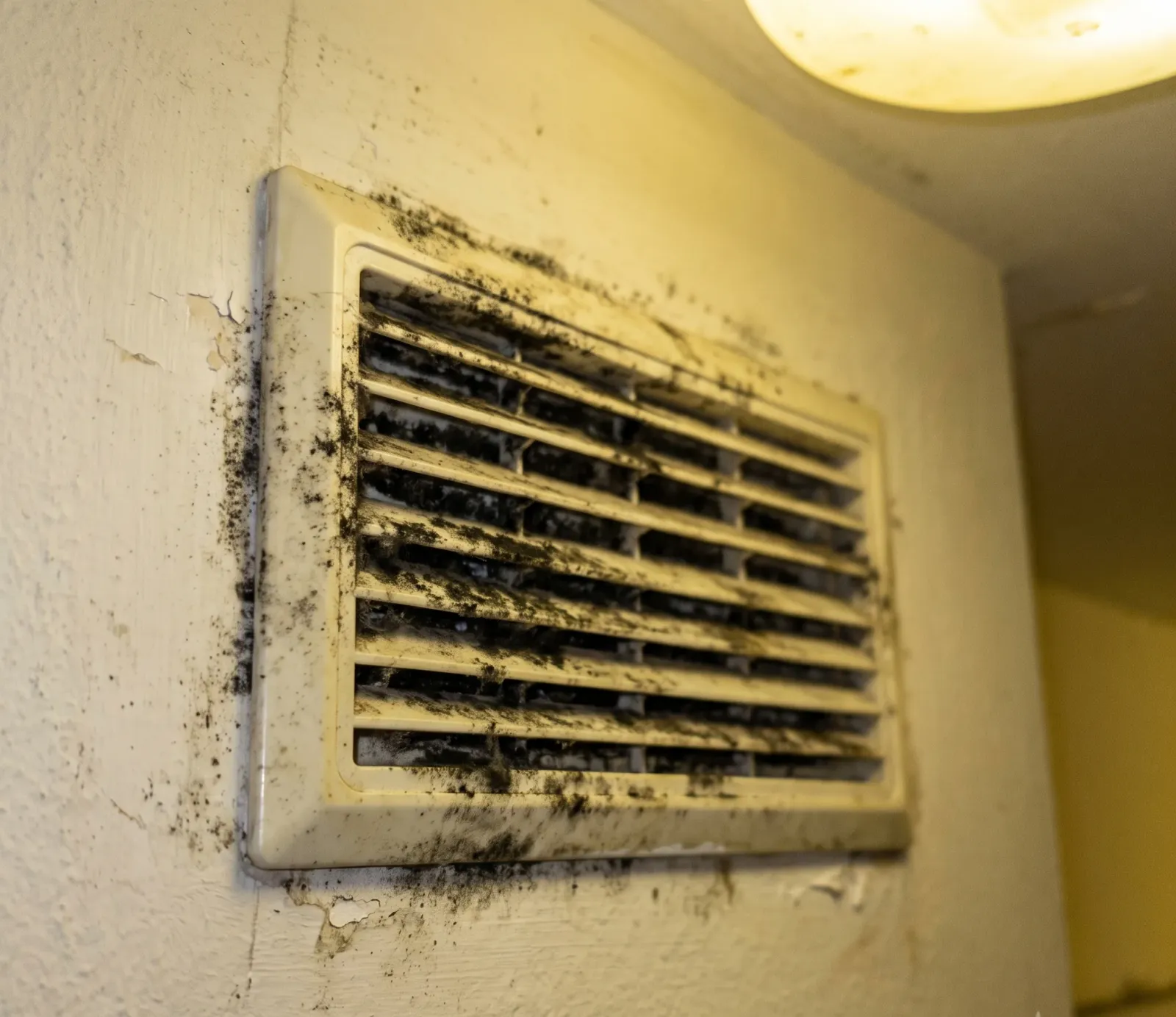
Air conditioning is usually the thing keeping Atlanta homes livable in July, and it does dehumidify as a side effect of cooling. The problem shows up at the equipment itself. A poorly maintained attic air handler produces condensate that has to drain somewhere, and a clogged or misaligned drain pan is one of the more common places mold actually starts, according to the pros who deal with these calls. The irony is that the same system fighting humidity indoors can become a moisture source if its drainage is ignored.
Attics Face Their Own Version
An attic under a roof with poor ventilation traps heat and humidity together, especially through an Atlanta summer. Warm, moist air rises from the living space below and, without enough airflow to carry it back out, condenses against the underside of the roof deck. Over a season that dampness soaks into the wood and any organic material nearby, like insulation paper facing, and mold takes hold in a space most homeowners rarely inspect until a stain shows up on a ceiling below.
Organic Material Is the Fuel
Mold needs a food source as much as it needs moisture, and ordinary building materials supply it. Drywall paper facing, wood framing, subfloor, and insulation backing are all organic material that mold can colonize once they stay damp long enough. This is why the fix is rarely about scrubbing a visible patch. If the moisture source, whether it is a vapor barrier gap in a crawl space or a condensation point in a basement, is not addressed, the same organic materials will support new growth again.
Ventilation Is the Quiet Variable
Ventilation gets less attention than plumbing leaks but does more day-to-day work in an Atlanta home. Moving air keeps humidity from settling and condensing in one place long enough to matter. A crawl space with working vents or mechanical airflow, an attic with a functioning ridge and soffit system, and a bathroom fan that actually vents outside rather than into an attic cavity all reduce the odds of mold taking hold, even in a climate that stays humid for most of the year.
What This Means For Older Homes
Foundation type in Atlanta varies by lot and construction era more than by neighborhood, so two houses on the same street, whether near Virginia-Highland or out toward East Lake, can have different vulnerabilities. An older home with an unencapsulated crawl space, an unfinished vapor barrier, or an aging air handler plenum is working against the climate every single day of summer, not just during a storm. Recognizing which of these conditions applies to a specific house is the first real step toward addressing it.
Why Ventilation Choices Matter Here
None of this means every humid day leads to a mold problem. It means Atlanta's climate removes the margin for error that a drier region would have. A small leak, a missed vapor barrier, or a neglected drain pan that might dry out on its own somewhere else tends to linger here instead, because the surrounding air is rarely dry enough to help. Understanding the climate is what makes the difference between catching a moisture problem early and finding it months later as visible growth.
Dealing with this in your home?
A basement near Ormewood Park can sit dry for a year, then take on water the first time a real downpour hits. Atlanta's red clay sheds rain rather than soaking it in, so water piles up against a foundation wall fast, especially on lots that slope toward Intrenchment Creek. This post covers what that pattern actually means for a home.