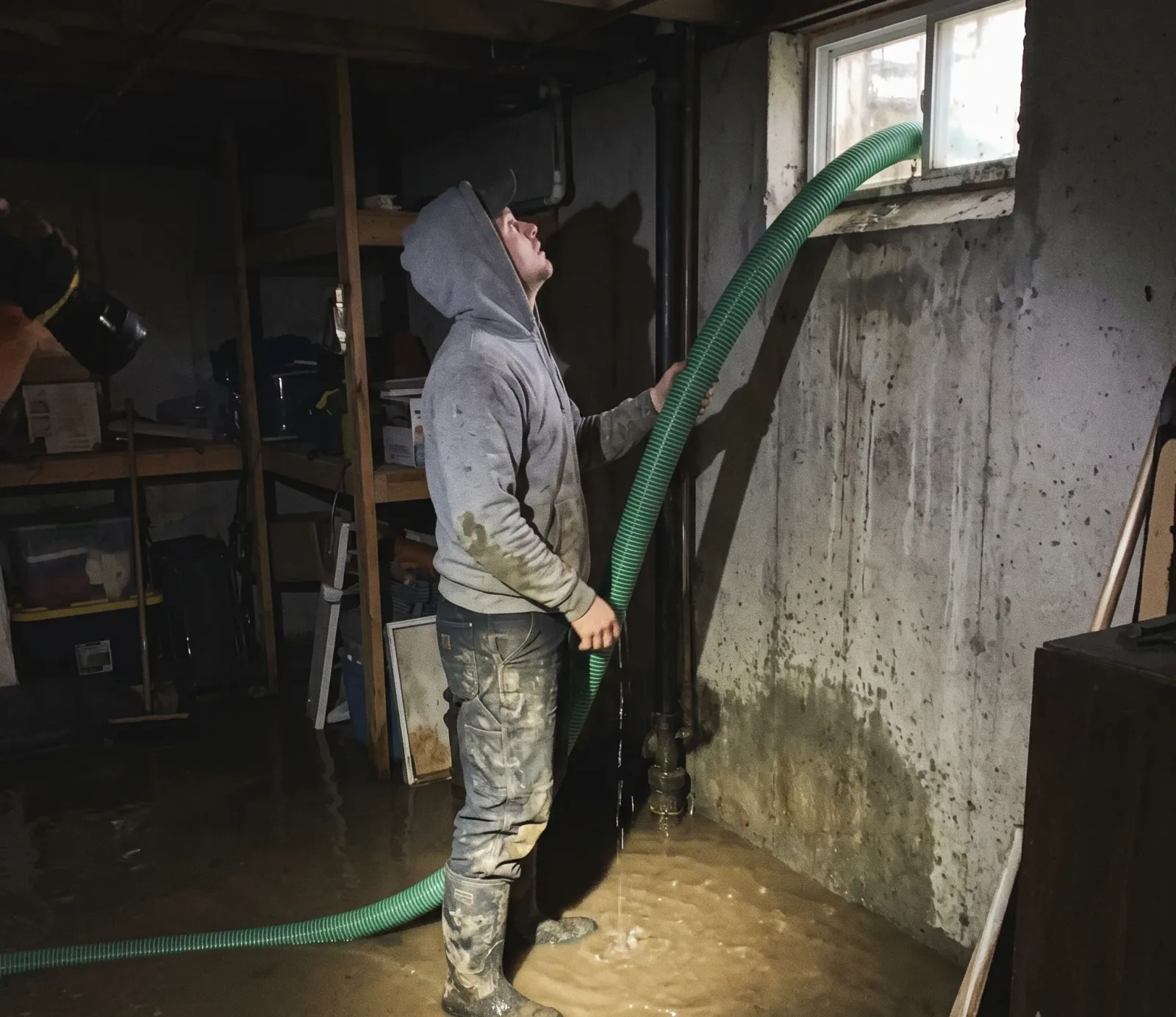
A Freeze Snaps Pipes Built for Mild Winters
Atlanta's water heaters usually sit in a basement, closet, or garage on a slab, so a failed tank doesn't just wet a pan, it runs downhill across finished flooring toward walls, baseboards, and anything stored nearby in neighborhoods like Grant Park or Kirkwood.
Many older homes near Ormewood Park or East Atlanta still run the original supply line and shutoff valve from decades ago, and a valve that's frozen with mineral buildup can't be closed quickly when the tank finally splits at the seam.
Grant Park and Candler Park sit on older, sloped lots where basements and crawl spaces are common, and heavy rain finds whichever low point a foundation has. Water tends to perch on the clay underneath rather than soak away. A house near Freedom Parkway floods differently than one on a flatter street farther out.
When Mold Risk Starts Rising
- Signal
- Water with a rust or amber tint, especially pooling near the drain valve or bottom seam of the tank, signals internal corrosion has worked through the steel shell rather than a clean fitting leak, which usually runs clear.
- Escalation
- Escalation often tracks the tank's age. A unit past ten years old near East Atlanta Village can hold steady for months, then fail overnight when internal corrosion finally breaches the tank wall, giving a household almost no warning before the floor is wet.
- Delay Cost
- A musty smell concentrated in the utility closet or garage corner where the tank sits, without any smell elsewhere in the house, suggests the moisture source is fixed in that one spot rather than traveling from a basement seepage issue along a foundation wall.
- Coverage
- A ticking or knocking sound from the tank as it heats, distinct from the hum of a furnace or the rush of a toilet overflow refilling upstairs, often means sediment has built up on the tank bottom, a common precursor to shell failure over time.
- First Check
- A slow but steady drop in the home's water pressure at nearby fixtures, with no other plumbing explanation, can mean water is diverting into a slow tank leak rather than reaching the tap at full volume.
- Local Coverage
- Tanks fail year-round, but a hard freeze can stress a unit already weakened by age or sediment, and Atlanta's cold snaps tend to arrive suddenly rather than gradually, catching an aging heater at its worst moment.
- Drying Method
- an estimated $450–$1600
What The Right Response Looks Like
A failing water heater is sometimes mistaken for basement seepage from hydrostatic pressure pushing through a foundation wall, since both can leave standing water on a basement floor near an exterior wall. Seepage tends to appear as a thin sheet or damp patch along the base of the foundation wall itself, spreading inward, while a tank failure pools in a tight circle around the tank's footprint regardless of where the nearest wall sits.
Basements, Crawl Spaces, and Slabs Differ
A failing water heater usually gives warning before it fully lets go: rust-colored water, a slow drip at the tank base, or a popping sound from sediment buildup. Once the tank shell itself corrodes through, failure is sudden and total. Atlanta homes with the unit in a closet or upstairs utility space see faster spread onto flooring and ceilings below.
They pull back baseboards and flooring at the perimeter of the spread, check for water that migrated under a shower pan, toilet, or nearby P-trap connection, and map how far it traveled before drying begins.
Water sitting under a slab or against a foundation wall in Atlanta usually traces back to the ground itself. Red clay and saprolite hold moisture instead of letting it pass through, so runoff near the Chattahoochee River or along Peachtree Creek lingers close to the house. Once that water gets past a barrier, drying it out fast matters more than most homeowners expect.
CALLING INSURANCE FIRST VS CALLING A PRO FIRST
| What You Get |
What You Pay |
|---|
| Storms that hit the Chattahoochee River watershed push water toward low ground fast, and older sections near Sweet Auburn or Cabbagetown can see sewage mixed into that runoff. Knowing which kind of water reached your home changes what the licensed pros we connect you with test for and how they plan the dry-out. | Atlanta sits on red clay that sheds water slowly, so a hard rain often ends up pooling where a foundation meets the yard rather than soaking away. Add the ridge-and-valley terrain funneling runoff toward low points near creeks like Peachtree Creek, and a basement near Grant Park or Candler Park takes on water faster than most homeowners expect. |
| A burst pipe near Druid Hills or a slow leak under a West Midtown loft both turn into the same problem if nobody moves fast: the S500 standard exists because a soaked material starts growing mold within roughly two days indoors. The licensed pros we connect you with are built around that window, not around paperwork. | A loft conversion in Reynoldstown sits on a concrete slab; a bungalow off Ponce de Leon Avenue might have a crawl space or a walkout basement depending on how the lot slopes. That range means the right response to a leak changes house to house, not by neighborhood name alone. |
| Water finds the low point of a house before anyone notices it. In Grant Park and Inman Park, older lots slope enough that a basement on one side sits partly below grade, and red clay under Atlanta holds runoff against that wall instead of draining it away. That is what the licensed pros we connect you with are actually walking into. | A slab near West Midtown holds water differently than a crawl space off Peachtree Creek, and Atlanta's hilly terrain means a storm can flood a low block in hours. The licensed pros we connect you with check the foundation type first, since that changes where water travels and how long it stays. |
Sewage Backups Are A Different Job
Shut off the cold water supply line and the gas or breaker to the unit right away. Move boxes and furniture off the wet floor, but don't try to drain or move the tank yourself once it's actively leaking or unstable.
Slab, Crawl Space, Or Basement Changes The Fix
Standing water from a tank failure can support mold growth within a day or two in Atlanta's humid months, especially May through September. Carpet, drywall, and insulation that stay wet develop musty odors and visible growth fastest. No specific illness is promised or implied; drying the area quickly is what actually limits the risk.
Let's get this drying started.
Standing water near Peachtree Creek or a Buckhead basement gets worse by the hour. Call now to reach the licensed pros who can start today.If standing water sat long enough for mold to start, that changes the scope beyond drying. Testing and remediation are priced separately from extraction, and the licensed pros in Atlanta connecting with you should explain that split before work begins, not after. Ask for it in writing, especially near Peachtree Creek or Proctor Creek flood-prone lots. pricing guide, and the service that handles this is Emergency Water Extraction.