When an Atlanta homeowner sees IICRC certified on a quote, it means the company has sent someone through training with the governing body that sets the industry standard for water damage work. A technician earns the credential by putting in training hours and passing a written exam on drying methods. Some quotes also mention firm certification, which is a separate step the company itself holds. It does not mean a license from the state, since Georgia does not require one for structural drying. Continuing education keeps the credential current. Worth checking for when comparing quotes, alongside experience and clear communication.
What The Letters Stand For
The IICRC sets written standards for cleaning and restoration trades, the best known being the S500 standard for water damage restoration. It does not build homes, inspect homes, or dry out a single basement in Buckhead or Decatur itself. What it does is train the people who do that work, then test them against a written exam before handing out a credential. A technician who passes is certified in a specific discipline, water damage restoration technician training being the most common starting point, with more advanced credentials layered on after.
A Credential, Not A License
This is the point that trips people up fastest. IICRC certification has no legal standing in Georgia. Nobody at the state level checks for it before a company drives out to a house near Peachtree Creek or the Chattahoochee River. Georgia's contractor licensing rules cover general contracting work above a certain dollar threshold, and separately, the state does not license mold assessors or remediators at all. IICRC certification sits entirely outside that system. It is a private credential a technician earns voluntarily, not a permit anyone is required to hold to do this work.
Why Insurers Look For It Anyway
If it carries no legal weight, why does it show up on so many Atlanta estimates. Insurance adjusters use it as a shorthand quality signal when reviewing a claim tied to a property in Sandy Springs or a condo near Midtown Atlanta. An adjuster reading a file full of unfamiliar company names has no easy way to judge technical competence from a distance. A recognized credential gives them one data point that the person doing the drying has been through a standardized course of training hours and passed a written exam, rather than learned entirely on the job with no outside check at all.
What The Training Actually Covers
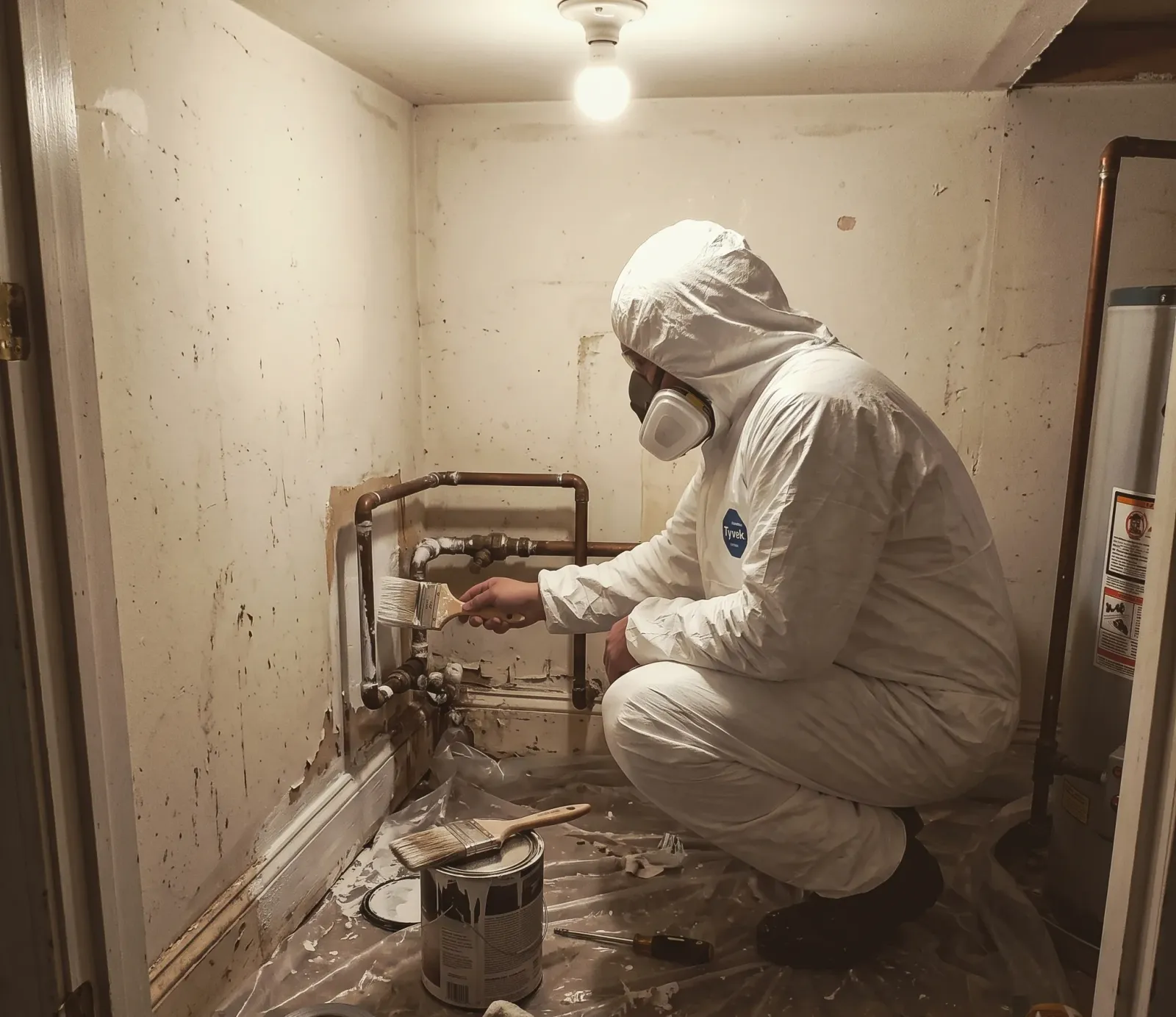
IICRC courses walk technicians through the physics of drying: how water moves through drywall, subfloor, and framing, how to read a moisture meter correctly, and how to set airflow and dehumidification so a structure actually dries instead of just looking dry on the surface. It is not a weekend of general knowledge. Courses run in blocks of classroom and hands-on training hours, followed by a written exam a technician has to pass. Someone restoring a house near Nancy Creek in Buckhead is dealing with the same drying physics as a technician anywhere else, and the training reflects that.
Firm Certification Versus Individual Certification
There are two separate things worth telling apart. A technician can hold a personal IICRC certification earned by sitting the exam themselves. A company can separately register for firm certification, which asks the business to commit to using certified technicians, following IICRC standards, and carrying certain insurance. Seeing a firm certification badge on a website does not confirm the specific person showing up at a house near Ponce de Leon Avenue is personally certified. The two are related but they are not the same claim, and a homeowner comparing quotes should notice which one is actually being made.
It Does Not Expire Once And Stay Valid
IICRC certification is not a one-time credential a technician earns and keeps forever without effort. It requires continuing education to stay current, since drying methods, equipment, and understanding of mold risk have all changed over the years. A technician who certified a decade ago and never renewed is in a different position than one who has kept up with continuing education. This matters in a place like Atlanta, where summer dew points keep indoor humidity high enough that drying speed genuinely changes the outcome of a job, and outdated methods can leave a space damp longer than it should be.
What It Does Not Guarantee
A certification confirms training was completed and an exam was passed. It does not guarantee a particular technician working a job in Decatur or East Atlanta will be careful, honest about pricing, or communicative about timelines. It is one input into a decision, not the whole decision. Homeowners who treat the badge as the only thing worth checking can still end up disappointed by slow callbacks or vague explanations, because certification speaks to technical knowledge, not to how a company runs its business day to day.
Reading An Estimate With This In Mind
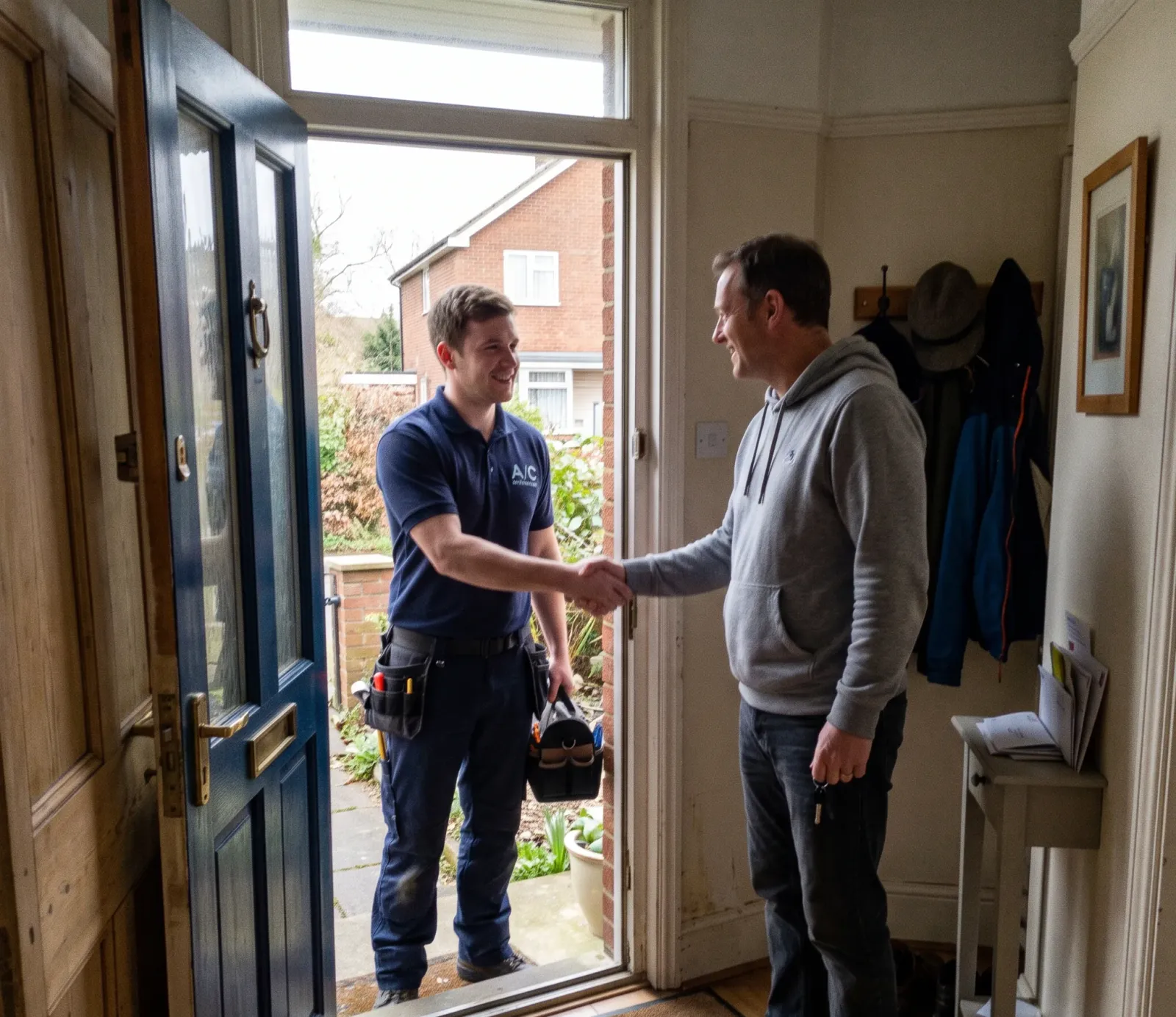
When comparing quotes for a job near Virginia-Highland or Grant Park, it helps to ask plainly which technicians on the job are personally certified, in which discipline, and how recently they completed continuing education. A vague answer or a badge with no name attached to it is worth a follow-up question. A company confident in its training usually answers specifically rather than pointing at a logo on its website and treating that as the end of the conversation.
Why This Shows Up On Almost Every Quote
Because so many Atlanta water losses eventually touch an insurance claim, whether the property sits near the Atlanta BeltLine or out toward Chamblee, certification has become close to a default expectation on estimates rather than a rare extra. Adjusters are used to seeing it, so companies list it whether or not a homeowner asks. That is useful context: its presence on a quote is common enough that it should not be read as an unusual sign of quality on its own, only as a baseline worth confirming rather than assuming.
The Simple Version To Remember
Strip away the acronym and the idea is straightforward. IICRC certification means a technician sat through structured training hours covering how water and drying actually work, then passed a written exam on it. It is a credential, not a Georgia legal requirement, and it says nothing by itself about price, speed, or customer service. Homeowners near Emory University or Cascade Heights comparing more than one quote can use it as one honest checkpoint among several, not as the only question worth asking.
What the Written Exam Doesn't Cover
None of this replaces asking direct questions of whoever shows up at the door. A homeowner in Atlanta who wants a plain-language explanation of what a specific quote includes can always ask a company to walk through it line by line before deciding anything, using the licensed pros connected through a request like that as the actual source of answers rather than a badge on a page.
Dealing with this in your home?
A basement near Ormewood Park can sit dry for a year, then take on water the first time a real downpour hits. Atlanta's red clay sheds rain rather than soaking it in, so water piles up against a foundation wall fast, especially on lots that slope toward Intrenchment Creek. This post covers what that pattern actually means for a home.