The last hard freeze of the season is usually when Atlanta homeowners breathe out and stop thinking about pipes. That relief is exactly why late winter and early spring cause quiet damage: a fitting stressed by cold weeks ago can keep dripping long after the cold snap ends, and nobody notices until the water stain shows up or the musty odor starts. This walkthrough moves room by room, from crawl space to attic, so you catch what a hard freeze left behind before it becomes a bigger repair. None of it takes tools you don't already own.
Start At The Water Meter
Before checking individual rooms, check the water meter itself. Shut off every fixture in the house, note the meter reading, wait fifteen minutes, and look again. Any movement means water is going somewhere you can't see, most often through a supply line that cracked during the freeze and has been leaking slowly since. If the number moves, walk the house looking for a shut-off valve you can close on that line while you track down the source, rather than letting it run another day.
Under Sinks And Behind Appliances
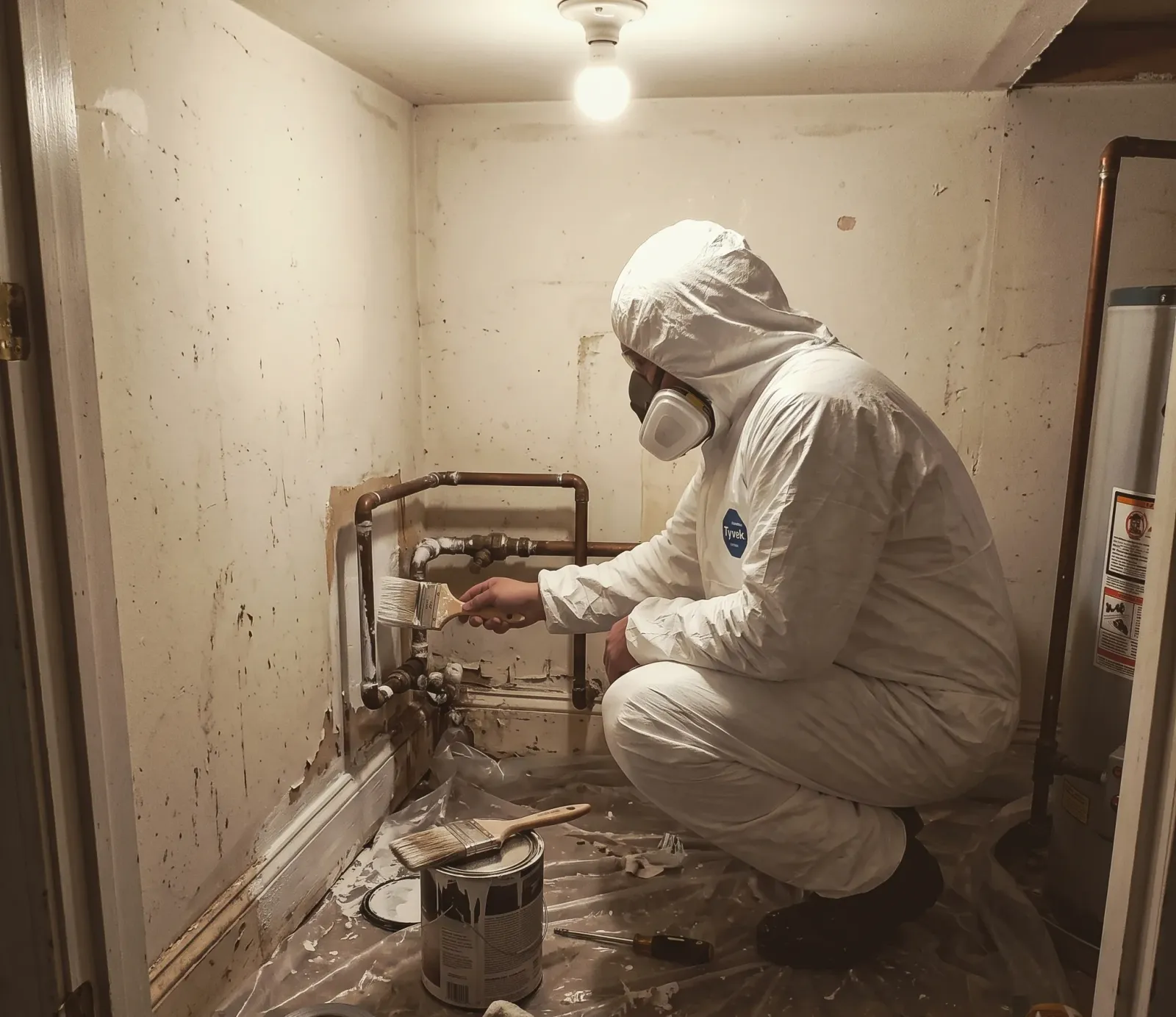
Once the last hard freeze breaks, check under every sink and behind the washing machine for a fitting that wept slowly through the cold weeks. A pinhole leak at a coupling rarely floods anything; it just stains the cabinet floor and keeps the wood damp long enough to smell musty. Pull items out from under the sink, feel around the fitting itself, and note whether the shutoff below it turns freely, because a valve seized from disuse is its own repair before anything else gets fixed.
The Crawl Space Check
Atlanta's older housing stock sits on crawl spaces more often than not, and a wet winter shows up there first. Whether yours is vented or encapsulated, look for a torn or missing vapor barrier, standing water pooled near the foundation wall, and any framing above it that looks darker or feels soft. A moisture meter reading on the joists tells you more than a glance, since wood can look fine and still be holding water it picked up months ago.
Basement Walls And Efflorescence
If the house has a basement, look at the walls at floor level for a white, powdery residue called efflorescence. It forms when water has moved through masonry and left mineral deposits behind as it evaporates, and it's a sign the wall has been wetter than it should be, even if there's no water on the floor right now. Check any finished basement wall for a musty odor near the baseboard too, since that smell often shows up before a visible stain does.
Gutters And Downspouts
Move outdoors next and follow the gutters around the whole roofline, checking that each downspout still empties away from the foundation rather than dumping against it. Look at the flashing where the roof meets a chimney or dormer for lifted edges winter wind may have worked loose. In the attic, a moisture meter or even a bare hand on the underside of the roof deck near any valley will tell you if water has been finding its way in since the last real cold snap.
The Roof And Attic Together
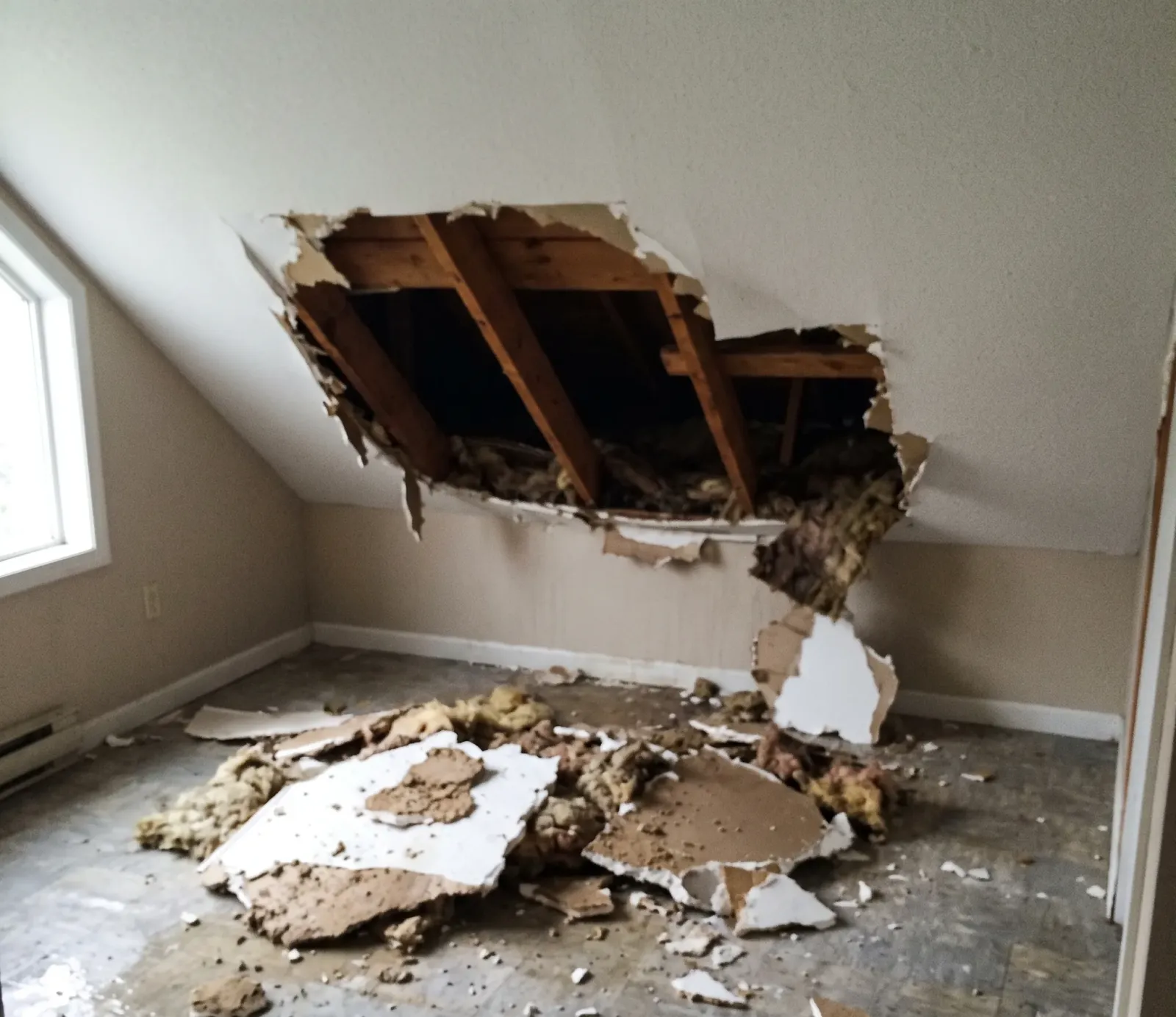
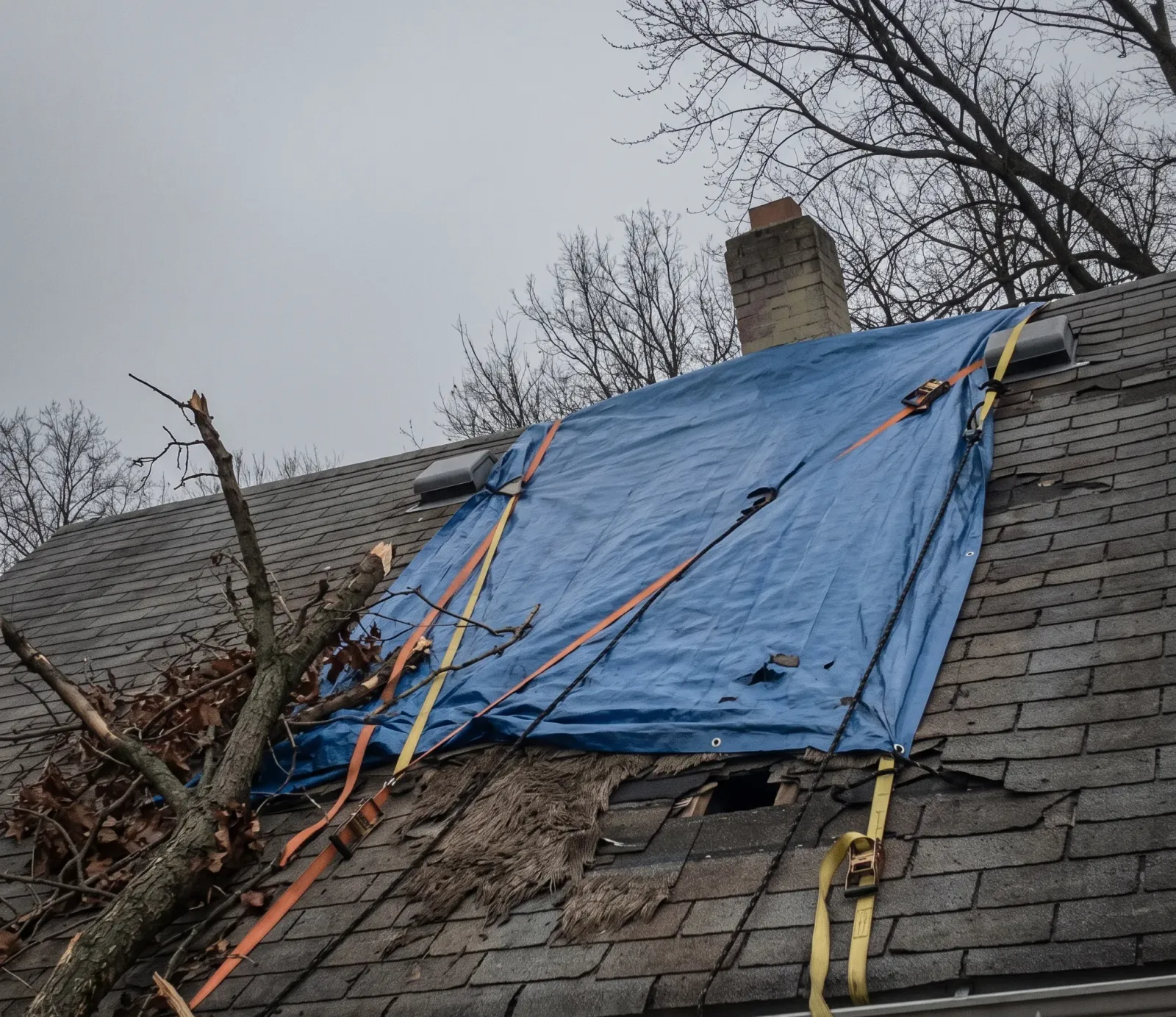
Roof wear from a winter of freezing and thawing often shows up first in the attic, not on the shingles. Go up with a flashlight and check the underside of the roof deck near chimneys, vents, and any valley for a water stain, dark streaking, or damp insulation. Outside, scan the roofline itself for flashing that's lifted or pulled away at a joint, since that's usually where the leak started even when the stain shows up several feet away inside.
Reading A Musty Odor Correctly
A musty odor is one of the most useful signals in this whole checklist because it often appears before any visible sign does. It usually means relative humidity has been elevated in an enclosed space for a while, whether that's a crawl space with a failing vapor barrier or a closet backing onto a damp basement wall. If you smell it, don't just spray something and move on. Trace it to the nearest wall, floor, or crawl space access and check that specific area first.
What A Moisture Meter Tells You
A basic moisture meter, sold at most hardware stores, takes the guesswork out of a room-by-room check. Press it against baseboards, subfloor near exterior walls, and any wood that looked or smelled off during your walkthrough. A reading that's clearly higher than the surrounding material means water got there and hasn't fully left yet, even if the surface looks dry to the eye. It's a small tool that turns a hunch into something you can act on.
When To Stop Guessing
Most of what this checklist finds is manageable on your own: a loose downspout, a valve that needs tightening, a gutter that needs cleaning out. But a slow leak that's been running for weeks inside a wall, a crawl space with real standing water, or a musty odor that keeps coming back after cleaning point to something a moisture meter and a flashlight can identify but not necessarily fix. That's a reasonable point to bring in the licensed pros we connect you with for a closer look.
A Realistic Timeline
This whole walkthrough takes most homeowners under an hour once you know what you're looking for, and it's worth doing every year once the freeze risk has clearly passed rather than waiting for a stain to force the issue. Atlanta's shift from cold, wet winters into humid summers means anything left damp in March has months to get worse before dry weather ever helps it along, so late winter is genuinely the better time to look than June.
Roof and Attic After the Freeze
None of this requires assuming the worst about your house. Most Atlanta homes come through winter fine, and this checklist is about catching the small percentage of problems while they're still small: a valve, a gutter joint, a patch of damp insulation. Do the walkthrough, note what you find, and fix what's within reach yourself. For anything that looks bigger than a weekend project, the licensed pros we connect you with can take it from there.
Dealing with this in your home?
A basement near Ormewood Park can sit dry for a year, then take on water the first time a real downpour hits. Atlanta's red clay sheds rain rather than soaking it in, so water piles up against a foundation wall fast, especially on lots that slope toward Intrenchment Creek. This post covers what that pattern actually means for a home.