Hotels & Hospitality
Hospitality Response
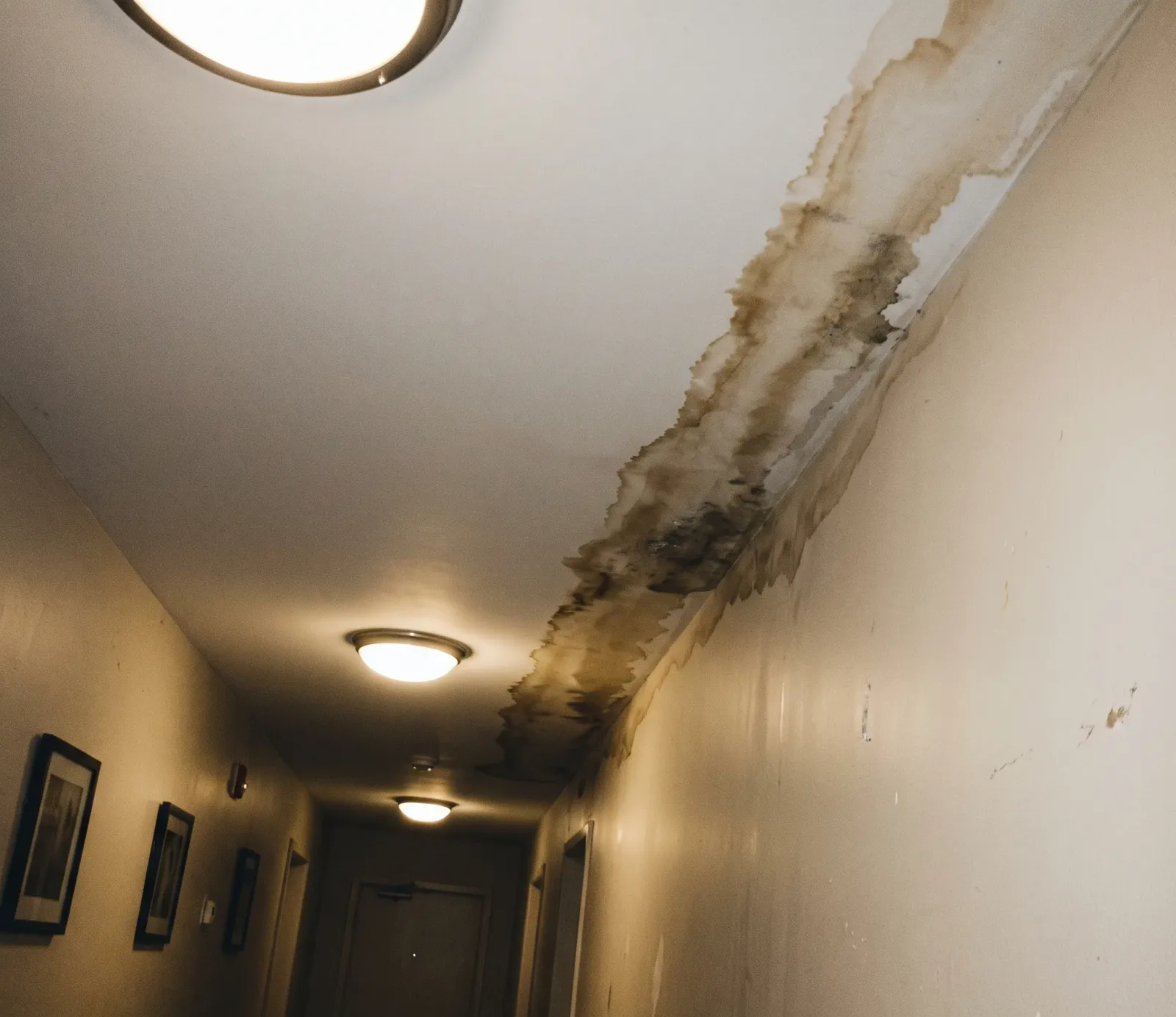
Shared walls, shared risers, and one leak that can move through several units before anyone reports it.
Multifamily water damage means a leak in one unit, riser, or common area that threatens adjacent units through shared walls and floors. The licensed pros we connect you with respond fast to limit how many units and how much of the building get affected.
A multifamily building spreads water damage sideways in a way a single-family house never does. A failed supply line on the third floor drops straight through a shared wall or a stacked riser into the unit below, then the one below that, and a property manager in Atlanta can go from one wet ceiling to three occupied units with a single phone call. The corridor carpet, the electrical panel room, and whatever mechanical closet feeds the stack all sit downstream of that one failure.
Atlanta's older apartment stock and its newer BeltLine-adjacent condo conversions handle this differently. A mid-century brick building near Kirkwood or Edgewood usually has plumbing runs and wall assemblies that were never meant to be watertight, so a leak finds its way into a neighboring unit through paths nobody can see from either side. A newer slab-on-grade building in a corridor like Old Fourth Ward has fewer crawl spaces to hide a leak in, but a riser failure there still travels down through the stack floor by floor.
What makes an apartment or condo loss different from a house call is who has to be told, and how fast. A homeowner decides for themselves whether to leave a wet room alone overnight. In a multifamily building, that decision belongs to building management, and it usually affects tenants who had nothing to do with causing the leak and nothing to gain from waiting on it.
A leak intrusion in one unit is rarely contained to that unit's square footage. Shared walls carry moisture sideways, and a riser running through multiple floors carries it vertically, so the adjacent unit and the unit directly below are both exposure points before anyone has confirmed the source. Corridors sit at the center of this because they're the common area every affected unit's door opens onto, which means hallway flooring and drywall take damage even when no single leaseholder is at fault.
Stack effect moves air and moisture vertically through a multi-story building's shared chases faster than most people expect, which is part of why a leak on one floor shows up as a stain two floors up before it shows up as a wet floor. Atlanta's summer humidity adds to that: a wet cavity behind a shared wall doesn't dry on its own in August the way it might in a drier month, and the S500 standard's 24-to-48-hour mold window applies inside that wall whether or not anyone can see the moisture yet.
| Area | Risk | Response |
|---|---|---|
| Who's affected | One household | Multiple units, possibly a stack |
| Source often hidden by | Walls, slab, attic | Riser, shared wall, floor above |
| Who coordinates access | Coordinate with building management first | Property manager, multiple tenants |
| Relocation concern | Isolate affected units, protect corridor | Common if unit is uninhabitable |
| Drying airflow | Open house layout | Corridors, closed doors slow drying |
| Documentation needs | One report | Dry fast, protect tenant belongings |
| Shared wall between units | Moisture migrates before drywall shows it | Check the adjacent unit early |
| Vacant or make-ready unit | Leak runs unnoticed for days | Confirm no one checks vacant units daily |
Every hour a leak sits unaddressed in an occupied building is an hour closer to a tenant relocation decision, and that decision costs a property manager more than the repair itself. Moving a household out of a unit, even temporarily, means lost rent, a displaced tenant who has to be housed somewhere, and a building management team fielding calls from every other resident on that stack wondering if they're next.
Vacancy timing matters here in a way it doesn't for a single owner-occupied home. A water loss that happens during turnover, while a unit is empty for make-ready work between leases, is comparatively simple to handle because nobody's living room furniture is in the way and nobody needs a hotel voucher. The same loss in an occupied unit mid-lease is a different job entirely, with a tenant's belongings, a tenant's schedule, and a tenant's patience all now part of the timeline.
Atlanta's rental market leans heavily toward multi-unit living, which means a large share of water-damage calls in the city's denser intown submarkets already involve a property manager or building management company rather than a single homeowner making the call directly. That changes who needs updates, who approves work, and who's accountable to residents while drying equipment runs in a hallway.
Common areas carry their own liability weight. A wet lobby floor, a saturated corridor carpet, or a stairwell with standing water is a slip-and-fall risk for every resident who passes through it, not just the household whose unit caused the leak. Building management has to weigh that exposure alongside the physical repair, which is part of why response speed in a shared building matters differently than it does in a single house.
A leak that starts in a mechanical room or a shared riser chase can also affect life-safety systems serving the whole building, not just the plumbing itself. Water finding its way into an electrical panel room or a fire-alarm control space turns a plumbing problem into a building-systems problem, and that's a call building management has to make fast, before power gets cut to more of the building than the wet area itself requires.
Assessing a multifamily loss means tracing the water's path through the structure, not just drying the room where it was first noticed. That means checking the unit where the leak started, the adjacent unit sharing that wall, and whatever unit sits below on the same stack, along with any corridor or common area the water crossed to get there. Moisture readings behind drywall in a shared wall assembly often tell a different story than what's visible on the surface.
Drying an occupied multifamily building means working around residents who still need to use their hallways, their stairwells, and in some cases their own units while equipment runs. That's a different logistics problem than drying an empty house, and it's one building management usually has more experience navigating than an individual tenant does, especially when more than one unit on the same stack needs monitoring at once.
A water loss in a multifamily building rarely has one clean answer to "whose responsibility is this." The unit where the leak originated, the adjacent unit that took on damage, and the building's own common-area systems can all be involved in the same event, and sorting that out is part of what building management and the licensed pros we connect you with work through together once the source is found and the water's stopped moving.
None of this changes the first priority, which is getting water stopped and drying started before it spreads further through the stack or across the corridor. Whether the building is an older brick complex near a neighborhood like Kirkwood or a newer development along the Atlanta BeltLine corridor, the same shared-wall and shared-riser risks apply, and the same window for keeping a leak from becoming a mold job applies with it.
Turnover between leases is when a lot of hidden multifamily damage surfaces. A unit sits vacant for make-ready work, nobody notices a slow leak intrusion behind a washer connection, and by the time a leasing agent walks the unit for photos, flooring and drywall near a shared wall are already soft. Atlanta property managers who schedule a moisture check as a standard make-ready step, not just a paint-and-carpet pass, catch this before a new tenant moves in and complains on day one.
Red clay under Atlanta drains slowly, so water that falls near Peachtree Creek or the Chattahoochee tends to sit against a foundation instead of moving off. Homes near Candler Park or Kirkwood can hold that moisture for days. The licensed pros we connect you with treat slow-draining clay as reason to check sooner, not later.Downtown Atlanta 30303, Garden Hills 30305 and Virginia-Highland 30306. Around Virginia-Highland and Grant Park, house age varies block by block, so one home's stone crawl space sits near another's poured slab. That mix means no two water calls in Atlanta look the same underneath. Whoever answers needs to check the actual foundation on site rather than guess from the street, and the licensed pros we connect you with do exactly that.
A hard freeze is rare in Atlanta, so plumbing in older sections near Candler Park and Druid Hills was never built with much margin for one. When temperatures do drop, burst pipes show up in clusters within days, and the pros we connect homeowners with plan for that seasonal spike rather than treating each call as unrelated.A commercial loss in Atlanta, from a Buford Highway strip retailer to a Perimeter Center office floor, usually carries a wider drying footprint and equipment count than a house. Expect the estimate to separate square footage, dehumidifier count and days running, since that combination drives the total more than the water source itself. pricing guide, and the commercial overview covers how a scheduled program works.
Hospitality Response
Food Service
Commercial Property
Once water crosses a shared wall or moves through a riser chase, it can reach the adjacent unit's wall cavity before anyone in that unit sees a drop of water on their own floor. That's why a leak reported in one Atlanta unit usually means checking the units beside and below it, not just the one where the call came from.
It depends on where the water came from and how long it sat. Clean supply-line water in one unit, caught fast, is often a contained job. Anything from a stack or riser, or anything sitting long enough to reach a common area or corridor, usually needs a wider look before it's called finished.
Sometimes, if the water and the drying equipment stay confined to one unit and there's no cause to enter neighboring units. If a shared wall, riser, or the corridor is involved, an adjacent unit may need entry for inspection even if no one there reported a problem, which is a building management decision as much as a technical one.
That's a building management and lease question first. Depending on the lease and the cause of the leak, a tenant may need to be moved out of a unit temporarily while walls dry, especially if a shared wall or corridor is affected. Property managers in Atlanta buildings generally handle relocation logistics directly with affected tenants.
Call now to get the licensed pros we connect you with started before a leak spreads past one unit.
Call (404) 496-7950